
Kimi K3 详解:遗忘如何成就最大的开源模型
[
[

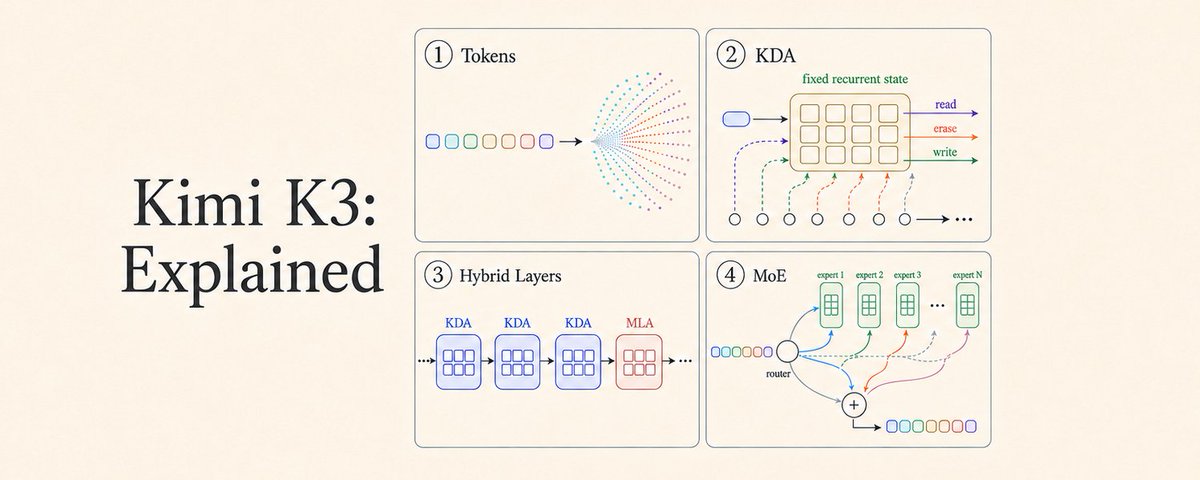
Kimi K3, explained: how forgetting made the biggest open model possible
Kimi K3 解析:遗忘机制如何使最大的开放模型成为可能
In November 2025, the open frontier was a one-trillion-parameter model.
2025年11月,开放前沿是一个万亿参数模型。
Kimi K2 Thinking could pick up a real GitHub issue, inspect the repository, patch the code, run the tests, and keep working through 200–300 tool calls without a person stepping in.
Kimi K2 Thinking可以接手一个真实的GitHub issue,检查代码仓库,修补代码,运行测试,并在无需人工干预的情况下持续进行200到300次工具调用。
Eight months later, Moonshot released Kimi K3, a 2.8-trillion-parameter behemoth.
八个月后,Moonshot发布了Kimi K3,一个拥有2.8万亿参数的庞然大物。
K3 is aimed at longer engineering jobs like:
K3旨在处理更长的工程任务,例如:
- navigating large, messy repositories
- 浏览庞大且杂乱的代码仓库
- optimizing GPU kernels
- 优化GPU内核
- completing CAD (Computer-aided design) tasks
- 完成 CAD(计算机辅助设计)任务
- and contributing to a chip-design demonstration.
- 并为芯片设计演示做出贡献。
The constraint behind all of those jobs is memory:
所有这些任务背后的限制因素是内存:
Kimi K3 inference path
Kimi K3 推理路径
The bill: memory that grows with everything at once
代价:与所有事物同时增长的内存
A model keeps a small bundle of working numbers for every token, at every layer and attention head. Engineers call this the KV cache. It saves the model from recomputing the past, but the cache grows with every token and must be read again to produce the next one. At frontier scale, that leaves less room for the model, fits fewer users on each GPU, and slows output as the conversation gets longer.
模型在每个层和每个注意力头为每个 token 保留一小束工作数值。工程师们称之为 KV cache。它使模型免于重新计算过去,但缓存会随着每个 token 的增长而增长,并且必须再次读取才能生成下一个 token。在前沿规模下,这留给模型的空间更少,每个 GPU 上能容纳的用户更少,并且随着对话变长,输出速度也会变慢。
The memory bill: every word pays at every layer, for every head — and the total grows until it hits the chip
内存开销:每个词在每一层、每个注意力头都会产生消耗——而总消耗会不断增长,直到触及芯片极限
The cache bill affects every large model. Limited hardware access helps explain why Chinese labs had more reason to reduce it using software-based optimizations.
缓存成本影响着每一个大模型。有限的硬件获取渠道有助于解释为什么中国实验室更有理由通过基于软件的优化来降低它。