
智能体测试:智能体在E2E测试栈中的定位
Sergii GorbachovStaff Software Engineer
Sergii GorbachovStaff 软件工程师
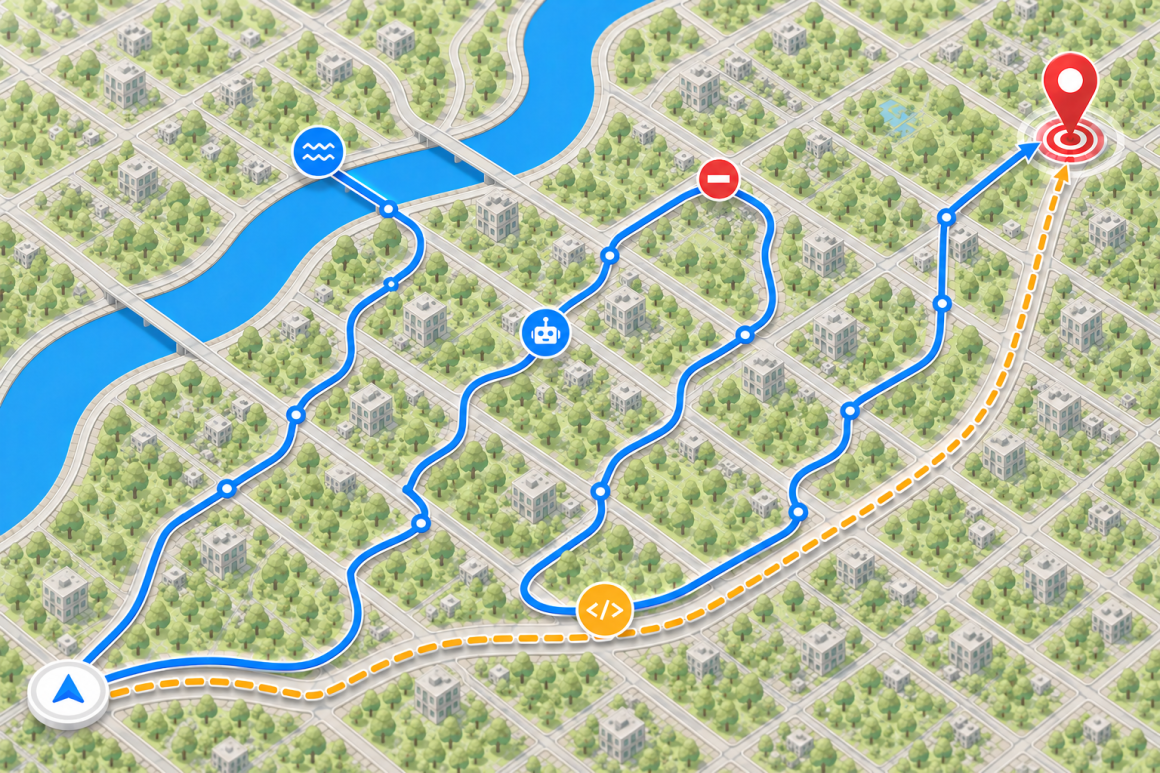
Agentic vs. traditional testing paths
Agent驱动与传统测试路径
Agentic vs. traditional testing paths
Agentic 与传统测试路径
Abstract
摘要
Agent-driven end-to-end (E2E) tests add a new exploratory layer to testing, but should they replace traditional deterministic tests? We ran more than 200 agentic E2E workflows using the Playwright MCP, Playwright CLI, and agent-generated Playwright tests in test workspaces using non-production data to find out how agentic testing could fit into both our and your testing stacks.
智能体驱动的端到端 (E2E) 测试为测试增加了一个新的探索层,但它们是否应该取代传统的确定性测试?我们在测试工作区中使用非生产数据,通过 Playwright MCP、Playwright CLI 和智能体生成的 Playwright 测试运行了 200 多个智能体 E2E 工作流,以了解智能体测试如何融入我们和您的测试技术栈。
1. From Journeys to Goals
1. 从旅程到目标
Traditional end-to-end tests validate a specific journey through the UI.
传统的端到端测试验证通过 UI 的特定流程。
click → click → type → assert
点击 → 点击 → 输入 → 断言
Agent-driven tests instead validate whether a goal can be achieved, often expressed as an instruction (e.g. “send a thread message”):
而智能体驱动的测试则验证目标是否能够实现,通常以指令的形式表达(例如“发送一条帖子消息”):
goal → agent adapts → verify result
目标 → 智能体调整 → 验证结果
This difference can be summarized simply:
这种差异可以简单地总结为:
Tests enforce journeys. Agents verify goals.
测试强制执行流程。Agent验证目标。
Across our agentic test runs, the overall workflow remained consistent (e.g. login → search → result → clear), but the exact sequence of actions varied. In practice, agents took different paths to reach the same outcome:
在我们的智能体测试运行中,整体工作流保持一致(例如,登录 → 搜索 → 结果 → 清除),但具体的操作序列有所不同。在实践中,智能体采取了不同的路径来达到相同的结果:
- Different input methods (clicking a search suggestion vs pressing Enter)
- 不同的输入方式(点击搜索建议与按下回车键)
- Different navigation patterns (reopening search vs reusing existing state)
- 不同的导航模式(重新打开搜索与重用现有状态)
- Additional or skipped steps (extra clicks, snapshots, or intermediate actions)
- 额外或跳过的步骤(额外的点击、快照或中间操作)
Agents can still validate intermediate steps when needed, but this flexibility comes with tradeoffs in reliability, cost, and execution time, which we explore in the next sections.
智能体在需...